

Impairment Testing for Goodwill How to Get It Right

You’ve bought a business, the integration is moving along, and sales have held up. The balance sheet still carries goodwill from the acquisition. Your first instinct is understandable: wait until year-end, then let the accountant run the impairment calculation.
That instinct can create a problem. Impairment testing for goodwill is a CGU design and assumptions exercise, not a year-end arithmetic task. Under IFRS in Canada, goodwill must be tested at least annually even when sales remain stable. Under ASPE, testing starts when an event or change in circumstances suggests that a reporting unit’s carrying amount may exceed its fair value. The wrong timing or unit structure can lead to a permanent write-down, audit rework, and a file that cannot explain why the conclusion was reasonable.
You want a test that reflects how the acquired business earns cash and a working paper that survives questions from your auditor, lender, or buyer. That starts with identifying the accounting framework before you model anything.
You Bought the Business Now the Goodwill Needs a Real Test
Impairment testing for goodwill is a CGU design and assumptions exercise, not a year-end arithmetic task. You paid more than the fair value of the identifiable net assets, so the premium now sits on your balance sheet as goodwill. The acquired company may still be invoicing customers, retaining staff, and tracking a budget that looks familiar. Stable operations do not settle the accounting question.
Owners naturally start with revenue, profit, and cash. If those measures have not fallen sharply, goodwill can look like a historical entry disconnected from current operations. Integration work also pushes the test behind payroll, financing, and customer delivery. That delay is where owner-managed files often lose the reasoning their auditor later needs to see.
The accounting requirement depends on your reporting framework. If you report under IFRS, test goodwill at least annually at the cash-generating-unit level. If you report under ASPE, test goodwill when events or changes in circumstances indicate that the reporting unit may be impaired. Canadian IFRS transition material identifies January 1, 2011 for publicly accountable enterprises adopting the standards for fiscal years beginning on or after that date. It also identifies January 1, 2010 as the transition date for most calendar-year companies adopting in 2011. The earlier Canadian standards model applied from 2002 to 2010. The Canadian IAS 36 overview provides that history.
Do not treat this as a routine year-end calculation. Under both IFRS and ASPE, a recognised goodwill impairment loss is not reversed later. A rushed test can turn an uncertain conclusion into a permanent financial statement consequence.
Stable sales don’t settle the question
Sales can hold steady while business value falls. A higher discount rate reduces present value. A margin reset reduces expected cash flows. A reorganisation can change which assets and overheads belong with the acquired operations.
Your internal reporting lines can also mislead you. Legal entities, tax structures, and divisions do not automatically define the cash-generating unit or reporting unit used for the test. Start with the unit that benefits from the acquisition and generates cash, then build the valuation around that unit.
Practical rule: Document why the selected unit receives the acquisition benefits, how it generates cash, and which assumptions support its carrying amount.
If you are preparing for refinancing, a sale, or a post-acquisition review, your working paper must explain what the goodwill represents, where it sits, which assumptions drive its value, and what changed since the acquisition. A broader transaction advisory guide for owners can frame the decision, but the accounting conclusion still rests on your framework and operating units.
Start the file when a margin reset, customer concentration change, refinancing pressure, or segment reorganisation appears. Do not wait for the year-end checklist.
Which Rules Apply to You IFRS or ASPE
The first question is not whether the goodwill balance looks large. It is which Canadian accounting framework governs your financial statements.
IFRS and ASPE use different testing triggers, measurement concepts, and testing units. Apply the wrong framework and the file can fail in either direction. You may prepare a full annual test when ASPE does not require one, or miss an ASPE trigger because you are waiting for year-end.
IFRS requires annual testing
For Canadian IFRS reporters, goodwill must be tested at least annually at the cash-generating-unit level. You must also reassess it when impairment indicators arise. Goodwill is not tested by itself because it does not generate independent cash inflows.
The CGU is the smallest unit, or group of units, that benefits from the acquisition and produces cash flows that can be assessed. Allocate goodwill to the CGU or group of CGUs expected to receive those benefits. The recoverable amount is the higher of value in use and fair value less costs of disposal, consistent with the IAS 36 implementation guide.
Do not let the chart of accounts decide the CGU. A legal entity, tax structure, or division may not match the operating unit that benefits from the acquisition. Your working paper should explain the unit selection before it presents valuation numbers.
ASPE starts with an impairment trigger
Under ASPE, goodwill is not tested on a fixed annual schedule. Testing begins when an event or change in circumstances indicates that the reporting unit’s carrying amount may exceed its fair value. Examples include a significant margin reset, the loss of an important customer, refinancing pressure, a material reorganisation, or a change in the expected use of the business.
If a trigger exists, the impairment loss is the excess of carrying amount over fair value, limited to the goodwill assigned to that reporting unit. ASPE also treats goodwill as a separate step after other applicable long-lived assets have been considered. The Canadian ASPE goodwill guidance describes the trigger-based approach. Canadian guidance on long-lived assets and goodwill explains the separate goodwill limitation.
| Feature | IFRS, IAS 36 | ASPE |
|---|---|---|
| Testing timing | At least annually, and when impairment indicators arise | When events or changes in circumstances indicate possible impairment |
| Testing unit | Cash-generating unit or group of CGUs | Reporting unit |
| Measurement focus | Recoverable amount, the higher of value in use and fair value less costs of disposal | Fair value |
| Allocation of goodwill | To the smallest CGU or group of CGUs benefiting from the acquisition | To the reporting unit benefiting from the goodwill |
| Loss limitation | Shortfall is allocated to goodwill first, subject to the applicable CGU allocation rules | Loss cannot exceed goodwill assigned to the reporting unit |
| Reversal | Goodwill impairment losses aren’t reversed | Goodwill impairment losses aren’t reversed |
Your reporting context can change
A GTA private business may shift reporting contexts during financing, acquisition, estate freeze, or sale activity. That change can affect the required test and the evidence your file needs.
Owner-managed files often fail on documentation, not arithmetic. Under ASPE, identify the event that changed the carrying amount story. Under IFRS, show that the annual CGU test was completed and that interim indicators were monitored. Record the framework, testing unit, allocation, trigger assessment, and conclusion in one clear file. A reviewer should see why the method fits the business without reconstructing the decision from scattered schedules.
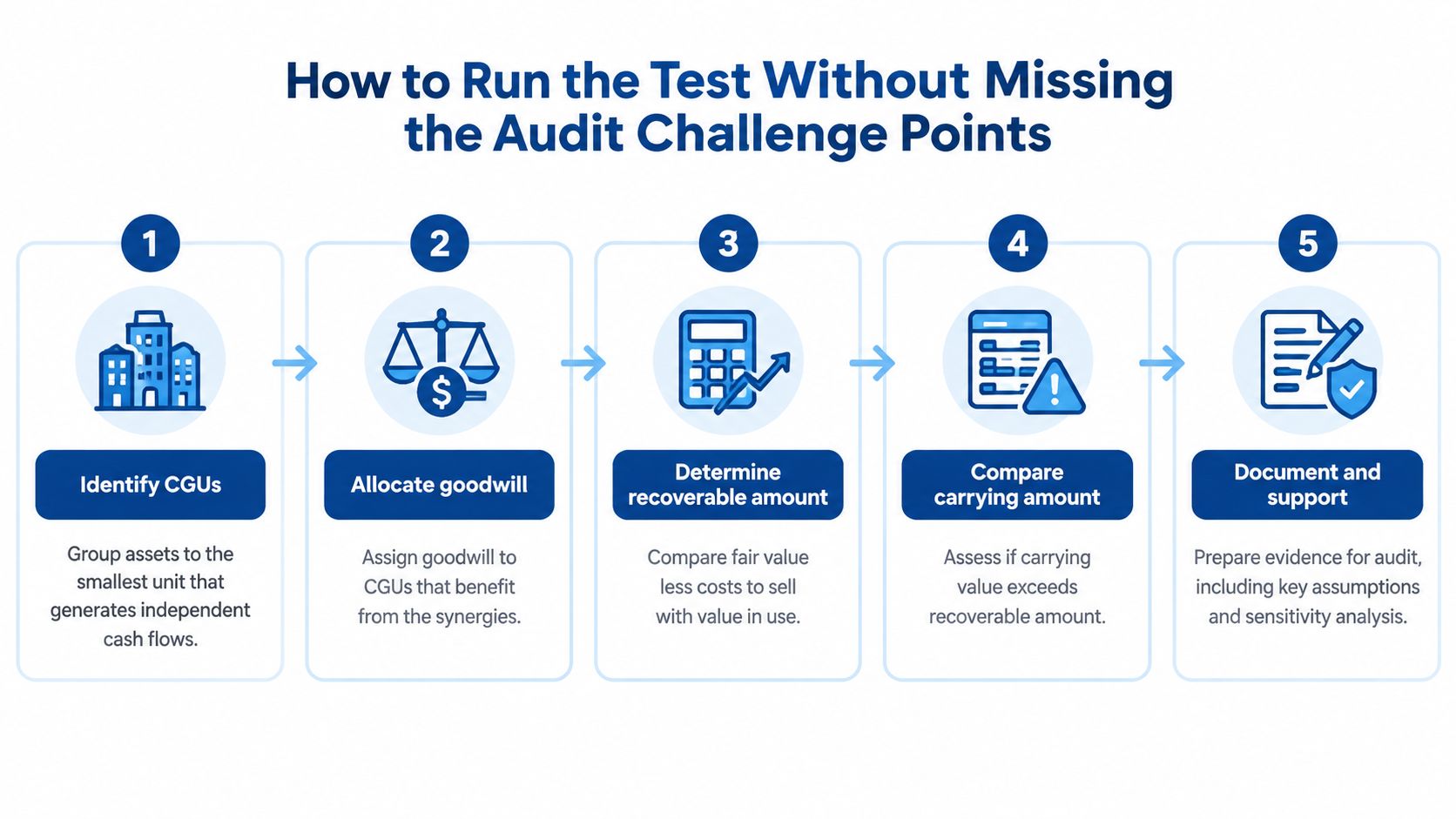
How to Run the Test Without Missing the Audit Challenge Points
A good impairment file follows the business. It starts with the operating unit, moves through valuation, and finishes with a conclusion that another person can reproduce.
Start with the CGU
Identify the smallest CGU, or group of CGUs, that benefits from the acquisition. Look at how management generates cash, how customers are served, and whether inflows are independent. A legal entity may contain several CGUs. Several legal entities may support one operating unit.
Write down why you chose the unit. Include the operating activities, management reporting, customer relationships, shared resources, and acquisition synergies that support the conclusion. If the structure changed after the acquisition, explain when and why.
Allocate goodwill where the benefits sit
Goodwill follows expected benefits. Allocate it to the CGU or group of CGUs that benefits from the acquired workforce, customer relationships, market position, or operating synergies. Do not allocate it merely because a legal entity acquired the shares or because the bookkeeping system uses that entity as its reporting bucket.
The allocation should be consistent with the acquisition rationale. If management bought a distributor to expand its customer base across several operating units, the file should explain how those units benefit. If only one operation receives the acquired customer relationships, the goodwill shouldn’t be spread across unrelated activities to make the test look stronger.
Determine recoverable amount
Under IFRS, recoverable amount is the higher of:
- Value in use: The present value of expected future cash flows from continuing to use the CGU.
- Fair value less costs of disposal: The amount that could be obtained from selling the CGU, after relevant disposal costs.
You need to assess both valuation bases. Relying on one method without considering the other can understate impairment risk and invite an audit challenge. Your work should connect forecast revenue, normalised margins, working capital, capital spending, discount rates, and terminal assumptions to actual business evidence.
Compare and allocate the shortfall
Compare the CGU’s carrying amount, including allocated goodwill, with recoverable amount. If carrying amount exceeds recoverable amount, recognise the excess as impairment. Allocate the loss to goodwill first, then apply the applicable rules to the other assets in the CGU.
Under ASPE, the comparison uses the reporting unit’s carrying amount, including goodwill, against fair value. The write-down is limited to the goodwill assigned to that reporting unit, after considering other applicable long-lived asset impairment requirements.
Document the judgement
Auditors usually focus on the decisions underneath the spreadsheet. Keep support for:
- CGU design: Why this unit produces largely independent cash inflows.
- Goodwill allocation: Which acquired benefits flow to the unit.
- Forecasts: How management built revenue, margin, capital spending, and working capital assumptions.
- Valuation inputs: Why the discount rate and terminal assumptions fit the risk.
- Sensitivity: How the conclusion changes when key assumptions move.
- Trigger monitoring: What indicators were reviewed and why the conclusion followed.
A business valuation service can support the valuation analysis where the assumptions are complex, the goodwill balance is significant, or the business is preparing for a transaction. The accounting conclusion still belongs in a file that clearly connects the valuation work to the applicable standard.
Why Goodwill Can Fail Even When Sales Hold Steady
Stable sales do not prove that goodwill remains recoverable. The test depends on the cash a CGU can generate, when those cash flows will arrive, and how the market prices the related risk.
A business can retain its customers while margins narrow. Labour, freight, financing, and supplier costs can change the unit’s cash profile. Management may also reduce its sustainable margin after finding that expected acquisition synergies have not materialised.
Discount rates create another pressure point. As the rate used to discount future cash flows rises, their present value falls. Terminal growth assumptions may weaken at the same time. Recoverable amount can therefore decline before the income statement shows a major operating setback.
The CGU can change the result
Overhead allocation can alter the conclusion. A legal entity may appear profitable because central costs sit elsewhere. Assign those costs to the CGU using the shared resources, and the carrying value comparison may look very different.
The opposite problem is also common. A broad CGU can combine a weak acquired operation with a stronger business, allowing stronger cash flows to conceal deterioration. Testing at that level produces a misleading model. As noted earlier, the correct CGU and recoverable amount framework determine whether the analysis reflects the acquired operations.
Review the financial information behind the model, not only the sales line. Your financial statements can reveal changes in business performance that affect margins, cash generation, funding costs, and the outlook for the unit.
Canadian market evidence shows why concentration deserves attention. In 2012, Canadian IFRS companies reported $7.9 billion of goodwill impairment, down from $11.0 billion in 2011, a 28% decline. About 76% of the 2012 total came from the top three impairment events, according to FEI Canada’s Goodwill Impairment Study.
Start with the CGUs carrying the largest goodwill balances. A small number of units can determine the overall result, and impairment can vary sharply from year to year. Annual testing does not replace interim monitoring. Track margin changes, lost customers, financing pressure, operational disruption, and missed acquisition benefits throughout the year.
Goodwill can fail because future cash flows changed, even when the sales line did not.
The accounting rule prevents a business from carrying acquisition value after the expected benefits have weakened. A disciplined test protects the balance sheet’s credibility and gives you a clearer answer before a refinancing, sale, or restructuring depends on the operating units’ true value.
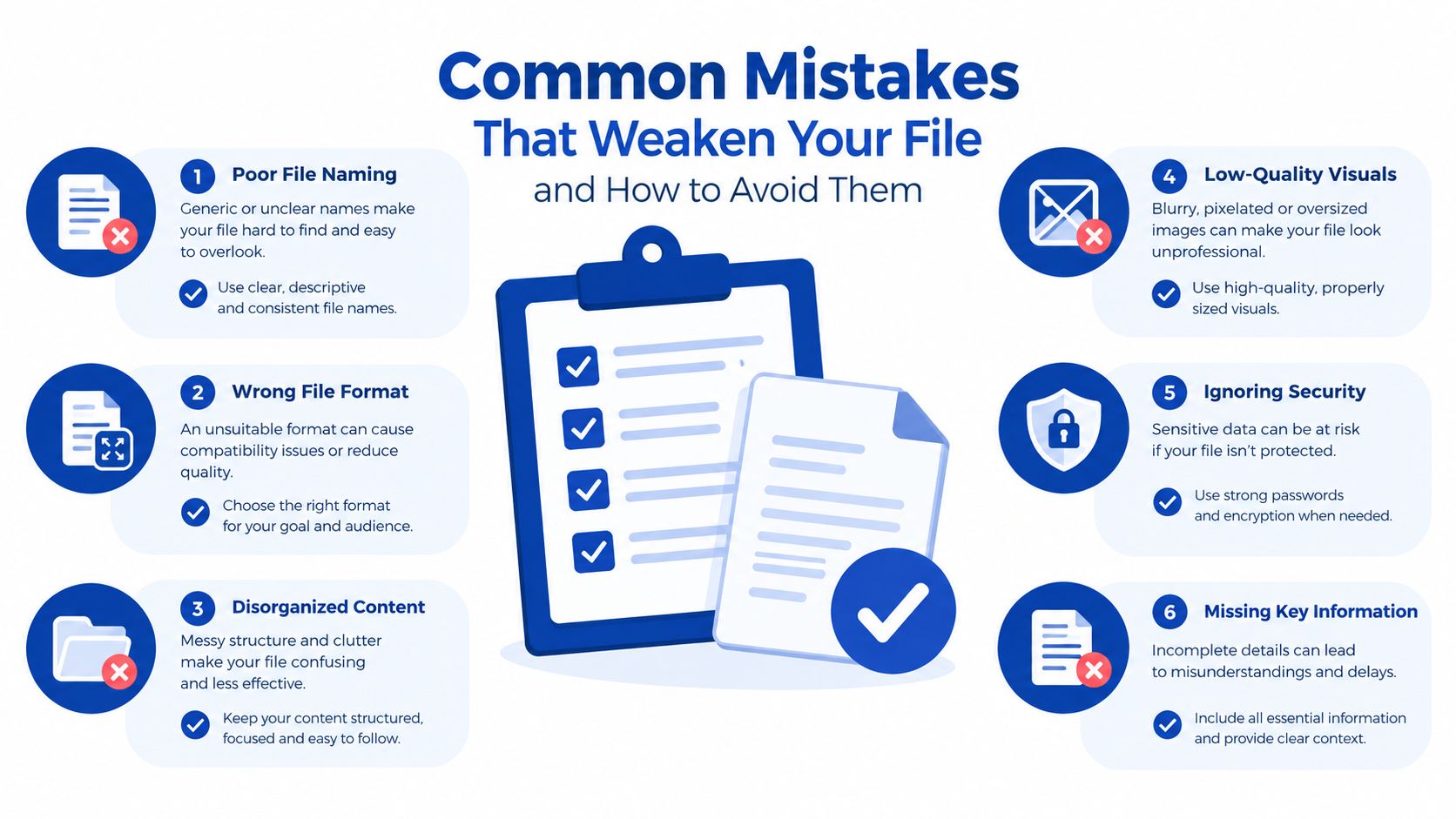
Common Mistakes That Weaken Your File and How to Avoid Them
The spreadsheet is rarely the weakest part of the file. The weakness usually appears earlier, when the business chooses the wrong unit, skips a trigger assessment, or relies on assumptions that no longer describe operations.
Legal entities are convenient, CGUs are accountable
Owner-managed businesses often track performance by corporation. That makes sense for tax filings, bank accounts, and legal liability. It doesn’t prove that the corporation is the correct CGU or reporting unit.
Write a short CGU design note. Describe the cash inflows, customers, management reporting, shared assets, and expected acquisition benefits. Update it when the group reorganises or changes how it serves customers.
No impairment conclusion still needs evidence
Under IFRS, an annual test is required even when management expects no impairment. Under ASPE, a trigger-based conclusion needs evidence that management considered relevant events and changes in circumstances.
A bare statement saying “no impairment identified” won’t carry much weight. Keep a trigger log that records changes in customers, margins, financing, operations, regulation, and business structure. Link each conclusion to management reports, forecasts, board materials, or other contemporaneous evidence.
Goodwill isn’t a temporary holding account
A goodwill impairment loss is permanent under both IFRS and ASPE. Canadian accounting guidance on impairment and recoverability confirms that goodwill write-downs aren’t reversed when conditions improve.
That rule changes how you should approach assumptions. You shouldn’t inflate forecasts to avoid a difficult conversation, and you shouldn’t use a stale discount rate because last year’s model is easier to update. The file should reflect the best supportable view at the testing date.
Under ASPE, remember the order of analysis. Other applicable long-lived assets are considered before the separate goodwill step. The goodwill write-down is limited to the goodwill assigned to the reporting unit. Skipping that sequence can distort the loss and leave the file open to challenge.
Build the file while the facts are fresh
Use a consistent package for each test. Include the framework conclusion, unit design, goodwill allocation, valuation model, assumption support, sensitivity analysis, and trigger assessment.
Sensitivity analysis should show which assumptions matter most. If a modest change to the discount rate, normalised margin, or growth assumption eliminates the headroom, say so clearly. That result doesn’t automatically determine impairment, but it tells you where the auditor will focus and where management needs better evidence.
What to Do Next When You Are Not Sure About Your Goodwill
Start with the decision in front of you. A refinancing may require a credible balance sheet. A customer concentration change may alter the cash flows supporting a CGU. A segment reorganisation may change the unit to which goodwill belongs. Sale readiness may expose assumptions that were acceptable for internal reporting but too weak for buyer scrutiny.
Don’t wait for year-end if the business story has already changed. Under IFRS, the annual test remains required, and interim indicators can demand attention sooner. Under ASPE, the event or change in circumstances is the starting point. Record what changed, when it changed, and how it affects the reporting unit’s fair value.
Make the unit understandable
A strong file answers four questions quickly:
- Where does the goodwill sit?
- Which cash flows support it?
- What assumptions determine recoverable amount or fair value?
- What evidence supports the conclusion?
If you can’t answer those questions without reopening the acquisition file, the reassessment is overdue. The number may still be supportable, but the documentation won’t explain it.
For a broader financial perspective, what your financial statements are really telling you is a useful starting point. Goodwill becomes useful information when it connects to the operating decisions you’re making now.
The best time to reassess is the first sign of a margin reset, customer concentration change, refinancing pressure, or segment reorganisation. That’s when the assumptions are still visible and the people who made the decisions can explain them.
If you’re unsure which reporting framework applies, which units should be tested, or how to support the assumptions, that’s exactly the kind of conversation that benefits from senior review before the audit file is assembled.
C&P Partners CPA offers senior-led advisory, business valuation, and financial reporting support for GTA owner-managed businesses dealing with acquisitions, reorganisations, refinancing, and sale readiness. Visit C&P Partners CPA to start a conversation about your goodwill, CGU design, and impairment documentation.