

Most owners think selling a business in Canada starts when a broker calls or a buyer appears. In reality, the work starts much earlier. If you want a smoother sale and a better after-tax result, you usually need to prepare 12 to 24 months before closing, and sometimes longer.
That is because the biggest issues are often not about finding a buyer. They are about structure, tax, and readiness. The difference between a clean share sale and a costly asset sale is often decided well before the business goes to market.
If you wait until a buyer shows interest, you may be too late to clean up the balance sheet, fix the share structure, or remove passive assets that can hurt your tax outcome. One of the biggest planning opportunities in Canada is the LCGE (Lifetime Capital Gains Exemption). In simple terms, the LCGE is a tax break that can let eligible owners sell qualifying shares of a private business and pay less tax on part of the gain. But it only works if the company meets the rules.
Selling a business in Canada is not just one event at closing. It is a planning process with a transaction at the end.
Why Most Business Sales Fail Before They Start
Many owners think they can get ready for sale once an offer comes in. That sounds practical, but it is usually too late. In most cases, the sale is won or lost before the first buyer reviews the numbers.
A common problem is waiting too long to clean up the company. When selling a business in Canada, an important question is whether the shares qualify for the LCGE (Lifetime Capital Gains Exemption). This exemption is available to individuals who sell qualifying shares of a private company. To qualify, the corporation has to meet specific active-business asset tests at the time of sale and during the 24 months before the sale. If the company holds too much cash, investments, or other passive assets, the exemption may not apply when you need it most. CFIB’s LCGE overview
Buyers do not pay for your untidy balance sheet
Buyers do not pay extra because the cleanup could have been done later. They pay for reliable earnings, clean records, and a structure that is easy to buy. If the company still holds excess cash, market investments, or old related-party balances, those issues should be addressed before the sale process begins, not after an LOI arrives.
That is why selling a business in Canada should be treated as a 12 to 24 month planning window, not a one-day event. The goal is to preserve the option of a share sale when possible, because a share sale is often more tax-efficient than an asset sale for owner-managed businesses in Canada. The 2024 LCGE for qualified small business corporation shares was $1,016,836, and it increased to $1,250,000 effective June 25, 2024. Only 50% of capital gains are taxable under the inclusion rules, which can make the tax savings significant. CFIB’s LCGE reference
Practical rule: If you want the LCGE to work, plan as if a buyer will review your last two years, not just your closing balance sheet.
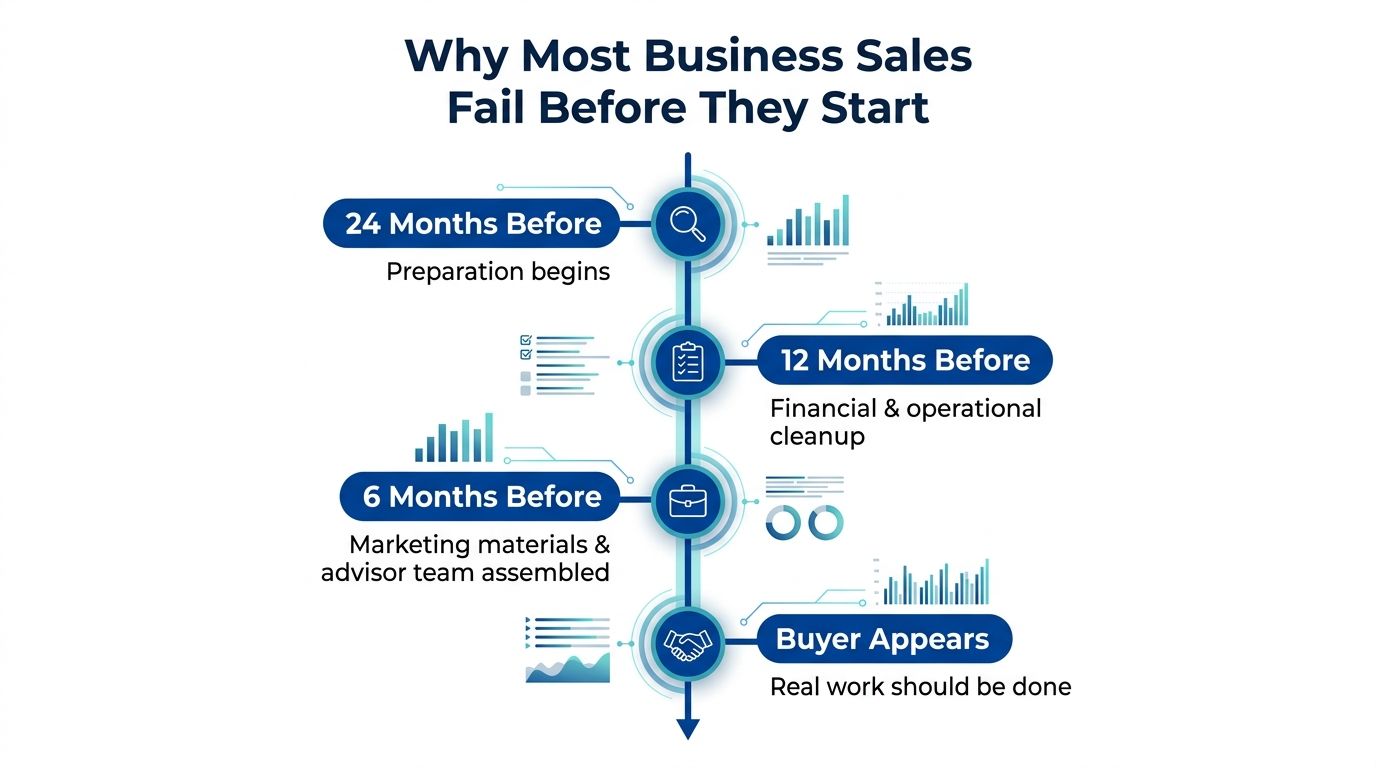
The biggest issue is often timing. By the time a buyer appears, you may no longer have enough time to move passive assets out, update records, or fix the share structure. Owners who start early have choices. Owners who start late usually end up negotiating from a weaker position.
Understanding the Lifetime Capital Gains Exemption Tests
The LCGE (Lifetime Capital Gains Exemption) is one of the most valuable tax breaks available when selling a private business in Canada. In simple language, it can reduce the tax you pay when you sell qualifying shares of your business.
But the LCGE does not apply automatically. Your shares have to qualify under CRA rules. Those rules look at who owns the shares, how long they have been owned, and what assets are inside the company. A business can look healthy and still fail the LCGE tests if the structure was not cleaned up early enough.
The three tests that actually matter
There are three main tests to watch.
First, the shares usually need to be owned for 24 months before the sale. Second, at the time of sale, at least 90% of the fair market value of the company’s assets must be used in an active business. Third, during the previous 24 months, at least 50% of the asset value must have been used in an active business. These rules come from CRA guidance on the capital gains deduction. CRA line 25400 guidance
| LCGE Qualification Tests at a Glance | Threshold | Common Failure Points |
|---|---|---|
| Share ownership period | 24 months | Late transfers, rushed reorganisations, the wrong legal owner |
| Active asset test at sale | 90% active-business use | Excess cash, marketable securities, passive real estate, loans to related parties |
| Active asset test over prior period | 50% active-business use | Passive assets left inside the company too long, weak balance-sheet management |
The balance-sheet mistakes that kill the exemption
The usual problems are simple. Too much cash stays in the company. Investments build up inside the operating company. A related-party loan is left sitting on the books. Land or property remains in the company even though it is no longer needed in operations.
Any of these can hurt a tax-efficient share sale. That is why the planning window matters. You may need time to move assets, reorganise ownership, or clean out non-qualifying items before a buyer enters the process.
The cost of getting this wrong can be large. At current exemption levels, failing to qualify can mean losing access to a meaningful amount of tax-sheltered gain. CFIB’s LCGE reference
A business can look attractive to a buyer and still fail the LCGE because the wrong assets were left in the company for too long.
Share Sale Versus Asset Sale Tax Consequences
Sellers and buyers often want different deal structures. Buyers usually prefer an asset sale. Sellers usually prefer a share sale. This matters because the structure can change the seller’s after-tax result in a major way.
In a share sale, the seller may be able to use the LCGE if the shares qualify. In an asset sale, the buyer purchases selected business assets instead of the shares of the company. That may be cleaner for the buyer, but it often creates a worse tax result for the seller.
Why the asset sale usually costs the vendor more
In an asset sale, tax can arise inside the corporation first. For example, recapture of capital cost allowance on depreciable property is fully taxable as income, and gains on inventory are 100% taxable. After that, the remaining cash often has to be paid out to the owner, which can create a second layer of tax personally. Insight’s asset vs share sale analysis
In a properly structured share sale, the seller may avoid that internal tax cost and may also preserve access to the LCGE. That is why a buyer’s request for an asset deal should never be treated as a minor point. It can materially reduce your net proceeds unless the price or structure is adjusted.
The negotiation lever is not just price
Many owners focus too heavily on the headline price and not enough on the structure. That is a mistake. If the buyer wants an asset deal, the seller should also negotiate allocation, purchase price, and compensation for the tax cost.
Bottom line: The structure of the deal can be worth more than a higher number on the first offer.
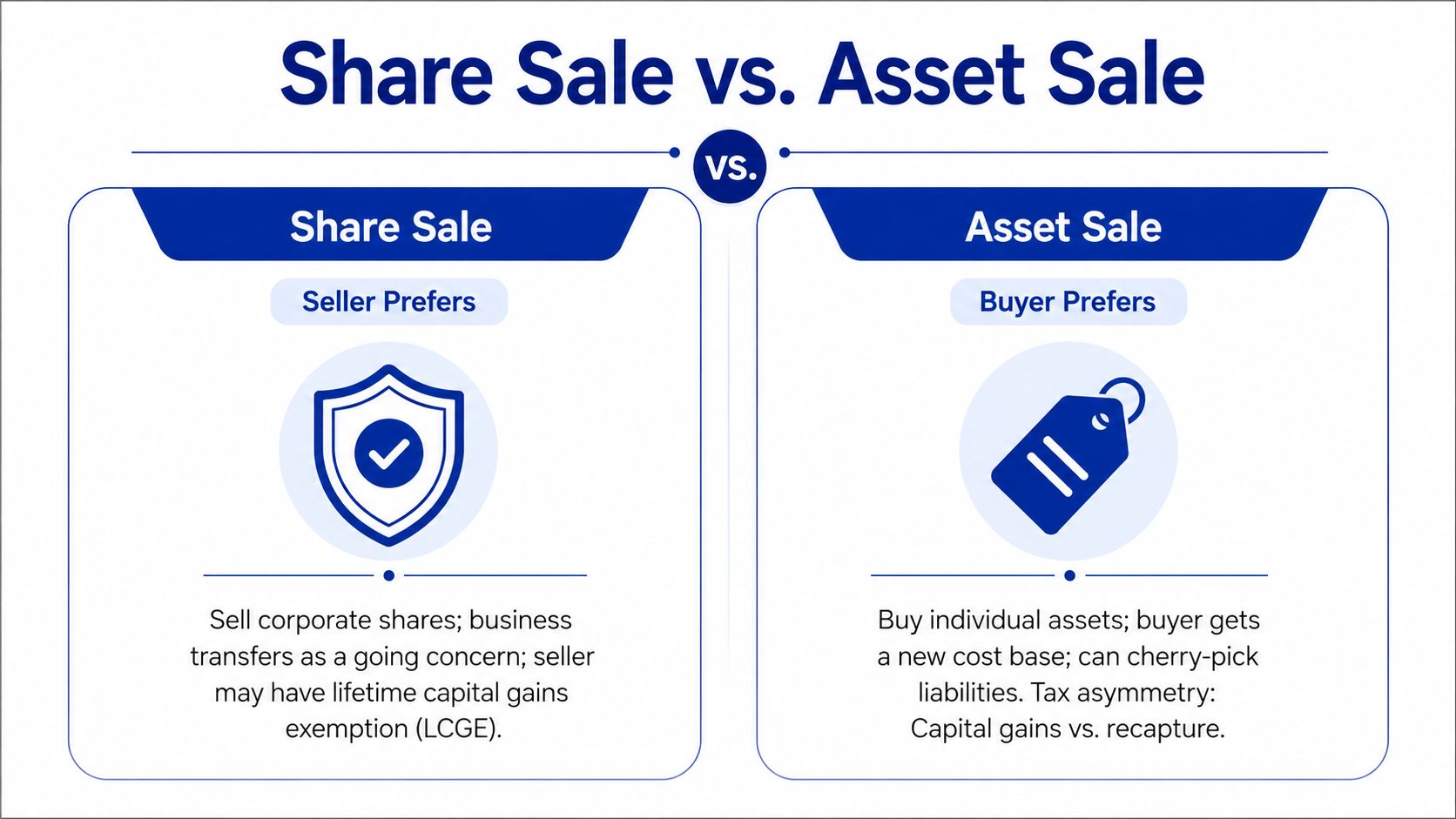
For many vendors, the best starting point is to aim for a share sale and move away from that only if the buyer forces the issue and the tax cost is properly priced in.
Preparing Your Business 12 to 24 Months Before Listing
The businesses that sell well are usually prepared long before they are marketed. The owner does not just tidy the books. They make the business easier for a buyer to understand and underwrite.
Start with the financials, then clean the story
Start by normalising earnings. Remove personal expenses, one-time items, and anything else that does not reflect normal operations. Buyers value recurring earnings, not owner-specific spending or temporary results. This is also the stage where a review of the financial statements can help answer the same questions a buyer will ask in diligence. What your financial statements are really telling you
Then fix the structure, not just the numbers
Once the earnings picture is clearer, review the corporate structure. If the company may not meet the 90% active asset test at sale, or the 50% active asset test over the previous 24 months, you need time to fix that. That is where passive investments, extra cash, and intercompany balances often become a problem.
The right advisors matter here. The CPA helps with earnings cleanup and tax planning. The lawyer helps with share documents, records, and sale agreements. If valuation is uncertain, a CBV or transaction advisor should be involved before the business is marketed.
Do not wait on legal and operational hygiene
Key contracts, IP assignments, employment agreements, and shareholder documents should all be in order before the business goes to market. If a buyer finds missing paperwork or unclear arrangements, they often assume there may be other hidden issues too.
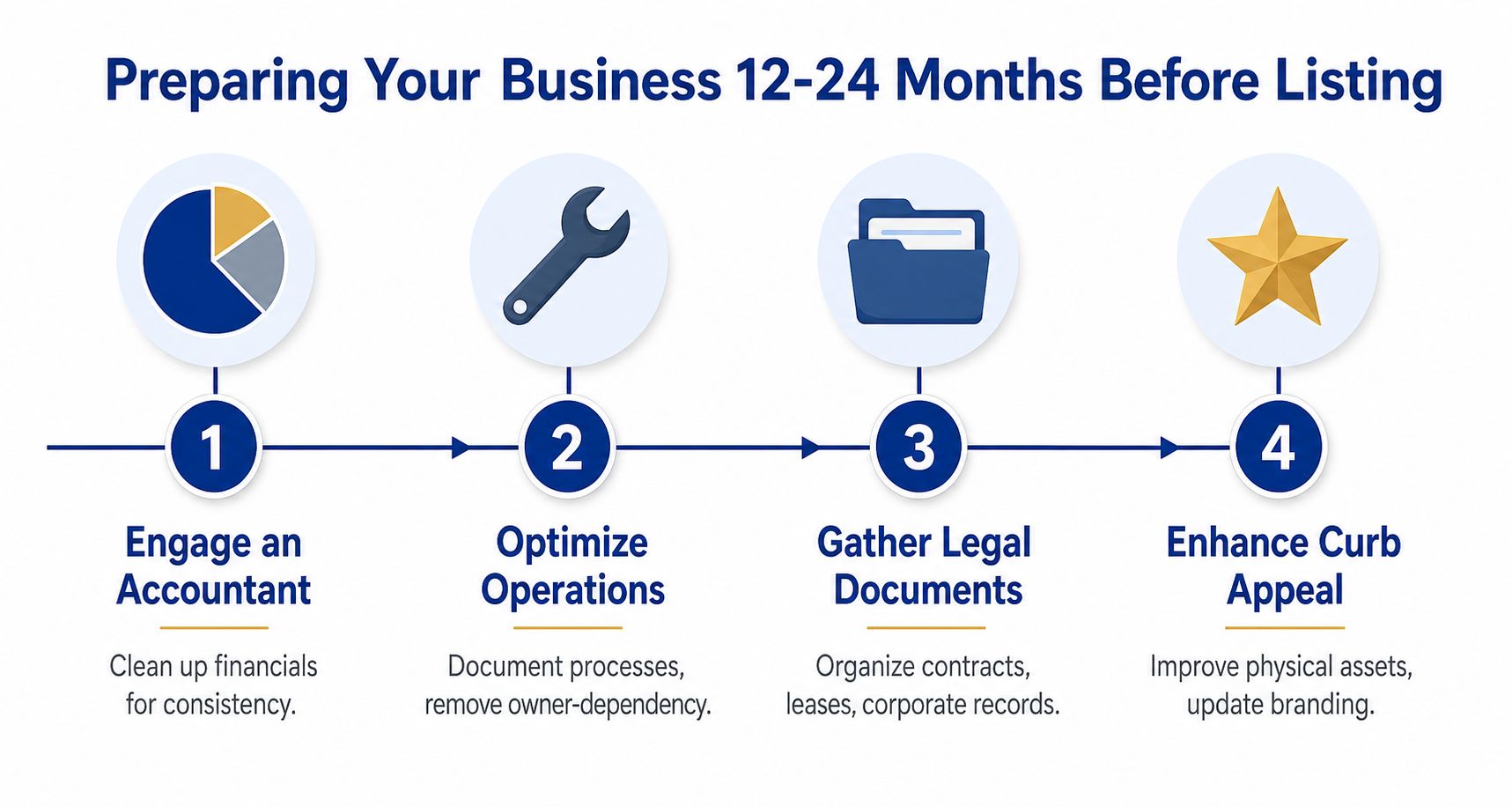
A practical timeline looks like this:
- Two years out: fix structure and review LCGE eligibility
- One year out: clean reporting and normalise earnings
- Six months out: prepare sale materials and align the advisor team
A useful rule is simple. If a buyer would question it in diligence, fix it before marketing the company.
Here is a practical planning order:
- Clean up the income statement first. Buyers pay for normalised earnings, so remove owner perks, personal spending, and unusual items before the process starts.
- Check passive assets early. Surplus cash and investments can hurt the LCGE tests if they stay inside the company too long.
- Lock down documents. Contracts, leases, minute books, and IP should be organised before a buyer asks for them.
- Prepare the story for diligence. A strong file answers questions before they are asked.
For owners who want a more formal advisory process, C&P Partners CPA offers buy and sell support as part of its advisory work for privately held businesses, including transaction support and due diligence analysis. YouTube overview on business sale preparation
Navigating the Sale Process From Valuation to Closing
Many owners only become serious about selling once a valuation or LOI appears. That is later than ideal, but you can still move forward if the pre-sale work has been done. A realistic asking price starts with a credible valuation, because buyers will test whether your number is supported.
The process moves faster when the file is built properly
The usual sequence is straightforward. The seller gets a CBV or valuation expert involved, an M&A advisor prepares the marketing materials, and the business is shown to selected buyers. Once a serious buyer emerges, the letter of intent sets out the major commercial terms, including exclusivity and deposit terms.
Then comes diligence. The buyer’s team reviews the financials, tests the earnings quality, and checks whether the business story holds up. If they find customer concentration, inconsistent margins, or weak controls, the negotiation can change quickly. If the file is strong, the process usually moves more smoothly toward the final agreement.
Watch the points where vendors lose control
The real pressure often appears in the purchase agreement. This is where holdbacks, escrows, reps and warranties, and working-capital adjustments are negotiated. Buyers often want to hold back part of the purchase price until post-closing risks are resolved. Earn-outs can also move some of the future risk back to the seller.
Closing details matter too. Funds need to flow properly, liens must be discharged, and if the buyer is non-resident, the section 116 requirements must be handled correctly. These issues can affect timing and payment if they are ignored.
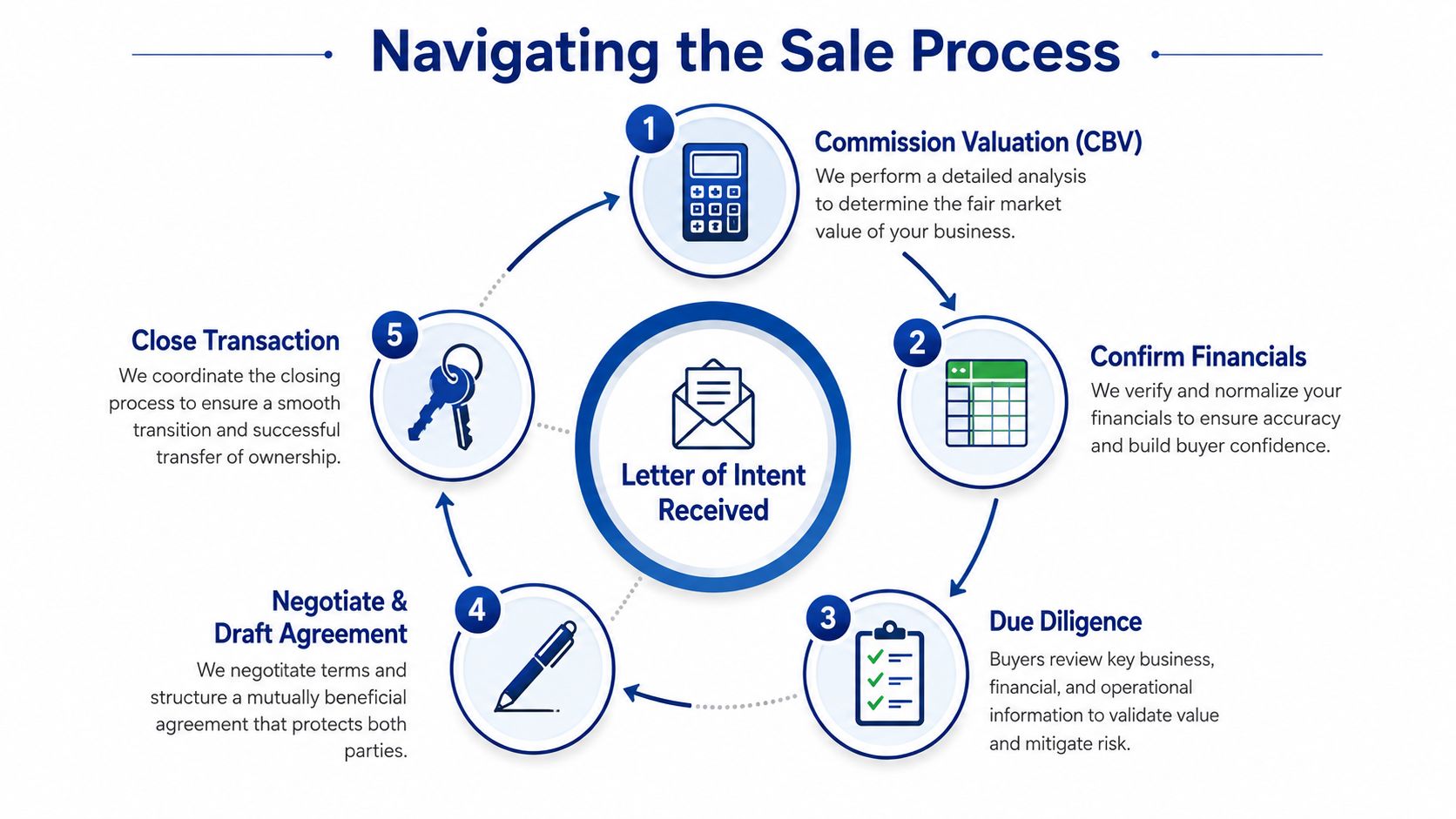
This is why owners should stop looking only at price. A number that seems attractive at first can become much less attractive once you factor in holdbacks, tax structure, and closing adjustments.
The strongest sellers use the LOI to settle the main commercial points early, then let diligence confirm the story rather than uncover surprises.
Managing GST HST Elections and Deal Structure
Many owners ask whether the sale is tax-free. A better question is whether the structure avoids unnecessary GST/HST problems at closing. This matters because poor planning can create an avoidable cash burden for the buyer and extra complexity for the seller.
File the election before the deadline, not after the pain starts
CRA allows the seller and buyer to jointly elect so that no GST/HST is payable on the sale of a business in the right circumstances. This is often called the section 167 election. If the buyer is acquiring all or substantially all of the assets needed to carry on the business, the election can make closing much easier. CRA selling a business guidance
The filing must be done properly, and the Form GST44 deadline should not be left until the last minute.
Allocation drives tax on both sides
In an asset sale, the purchase agreement also needs a clear asset allocation. How the price is divided among goodwill, depreciable assets, inventory, and other classes can change both the seller’s tax result and the buyer’s future tax deductions.
| GST/HST Election and Allocation Impact Summary | Seller Tax Impact | Buyer Cash Outlay | Filing Requirement |
|---|---|---|---|
| Asset sale with no election | Higher administrative burden and possible tax friction | Higher upfront cash need | GST/HST reporting applies |
| Business sale with joint election | GST/HST does not apply on the elected transfer | Lower cash needed at closing | Joint election filing required |
| Poor allocation language | Risk of unfavourable recapture or disputed reporting | Harder to model after-tax cost | Allocation should be documented in the agreement |
For vendors, the lesson is simple. Do not leave deal structure and GST/HST planning to the closing week.
Planning Your Post-Sale Transition and Next Steps
The sale does not really end on closing day. What happens after closing can still affect your tax result, your cash flow, and your obligations to the buyer.
Your transition terms affect your tax outcome
If you stay involved as a consultant or transition manager, the details matter. Restrictive covenants can also create tax issues under section 56.4, so legal terms should be reviewed together with the tax structure.
Earn-outs, holdbacks, and seller financing can spread both the cash flow and the tax reporting over several years. That means you need to know when the money is expected, how it will be taxed, and what protections you have if the buyer does not perform.
What to do with the proceeds matters too
After the sale, the next question is where the money goes. Some owners move proceeds into a holding company. Others use personal investment planning or family structures. The best approach depends on your wider financial picture and risk tolerance.
Keep the file open after closing long enough to deal with adjustments, elections, and any post-close disputes. A closed deal can still create tax work later.
If you want the sale to hold together after closing, your post-sale plan should match the structure you used before the sale. If those two parts do not align, the transaction can feel much more expensive a few months later.
If you are serious about selling a business in Canada, do not start with the broker call. Start with the structure. C&P Partners CPA helps owner-managers think through the tax, valuation, and reporting issues that can determine whether the LCGE works and how much of the sale proceeds you keep after tax. Visit C&P Partners CPA if you want to prepare properly before going to market.